Future-Proofing with Long Range Radar Modules
Long range radar modules extend detection far beyond PIR sensors. Review range classes, antenna design and applications in security and traffic sensing.
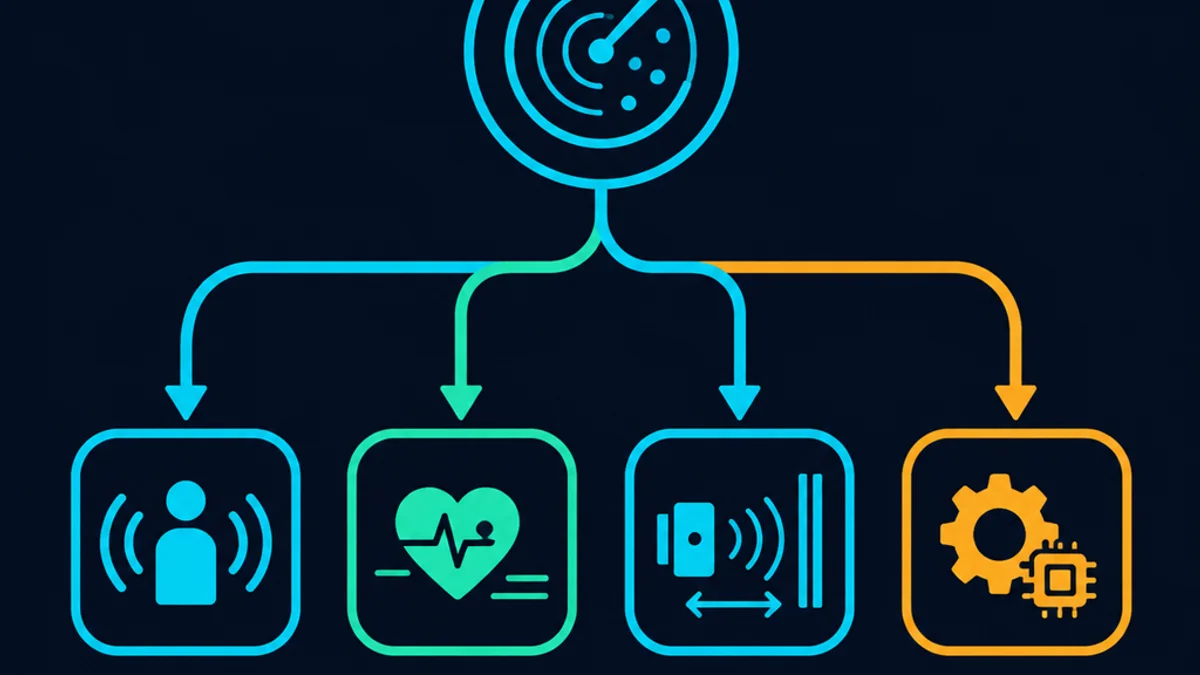
Long range radar is becoming a core sensing technology for vehicles, machines, infrastructure, and security environments that need reliable awareness beyond what the human eye or a camera can consistently provide. As radar sensors become more compact, software-defined, and easier to integrate, organizations can use them to detect movement, estimate distance, support automation, and improve situational awareness in challenging conditions.
The future is not simply about seeing farther. It is about building smarter radar systems that can interpret complex environments, work alongside other sensors, and deliver dependable data where safety, uptime, and precision matter.
What makes long range radar important now?
Long range radar matters because more systems are being asked to understand their surroundings in real time, often across wider areas and in less-than-perfect visibility. Cameras can provide visual detail, lidar can offer high-resolution spatial data, and ultrasonic sensors can help at close distances, but radar brings a distinct strength: it can detect objects and motion using radio waves, which makes it useful in darkness, fog, dust, rain, glare, and other difficult conditions.
That reliability is one reason radar continues to move beyond traditional aerospace, defense, and maritime settings. It now plays an expanding role in automotive driver assistance, robotics, industrial automation, smart infrastructure, traffic monitoring, perimeter security, agriculture, ports, logistics yards, and unmanned platforms. In these environments, the goal is not always dramatic long-distance detection. Often, the goal is consistent, early awareness that gives a system more time to respond.
A long range radar module can help product developers and system integrators add that awareness without building radar hardware from the ground up. Instead of treating radar as a specialized, standalone instrument, modern designs increasingly treat it as an embedded sensing layer that feeds useful information into a larger decision-making system.

The evolution from detection to intelligent perception
Traditional radar was often associated with detecting that something was present at a distance. Modern radar is moving toward perception: understanding where an object is, how fast it is moving, how its movement is changing, and how that information should influence the next action.
This shift is important because raw detection alone is rarely enough for advanced applications. A vehicle does not only need to know that something is ahead; it needs to understand whether that object is in its lane, moving toward it, crossing its path, or slowing down. A warehouse automation system does not only need to detect motion; it needs to distinguish between a worker, a forklift, a gate, and nearby machinery. A security installation does not only need to sense activity; it needs to reduce false alerts caused by weather, vegetation, animals, or background motion.
Future radar systems will rely heavily on signal processing, embedded computing, and software interpretation. The sensor captures reflected radio signals, but the real value comes from converting those signals into useful information. That information may include range, velocity, angle, target grouping, motion patterns, or confidence levels. As processing improves, radar can become less like a simple detector and more like a practical perception engine.
This also changes how engineers and buyers evaluate radar sensors. The hardware still matters, but the quality of the software, calibration tools, data interface, and integration support matter just as much. A sensor that is technically powerful but difficult to tune may deliver less practical value than a balanced module designed for real-world deployment.
How do radar sensors work with other technologies?
Radar sensors work best when they are part of a broader sensing strategy, especially in applications where no single technology can handle every condition. Radar can provide distance and motion awareness, while cameras may add visual classification, lidar may add detailed geometry, and inertial or positioning systems may add context about platform movement.
This approach is often called sensor fusion. In simple terms, sensor fusion combines different sources of information so the overall system can make better decisions than it could with one sensor alone. If a camera is affected by glare, radar may still provide stable range and velocity data. If radar detects an object but cannot classify it visually, a camera may help identify what the object is. If lidar provides a precise shape but struggles in certain weather or cost-sensitive deployments, radar may offer a more resilient sensing layer.
For long range applications, this complementary role is especially valuable. Early detection gives systems more time to assess risk, confirm targets, and decide whether action is necessary. In an automated vehicle, that action might be adjusting speed. In a port or rail yard, it might be alerting an operator. In an industrial site, it might be slowing a machine or creating a safer working zone.
A practical sensor fusion strategy usually considers:
- Operating conditions: Lighting, weather, vibration, dust, electromagnetic noise, and physical obstructions all affect sensor selection.
- Detection priorities: Some systems need object presence, while others need speed, angle, tracking, or classification support.
- Response time: Longer detection distance is only useful if the system can process data and act quickly enough.
- Installation constraints: Mounting locati0n, field of view, power, enclosure design, and network connectivity shape performance.
- Cost and complexity: Adding more sensors can improve capability, but it also increases integration, validation, and maintenance effort.
The future of long range radar will not replace every other sensing method. Instead, radar will become a stronger foundation in mixed-sensor architectures where reliability and early awareness are essential.
Key trends shaping next-generation radar systems
The radar industry is being shaped by several trends that point toward more capable, adaptable, and accessible solutions. These trends affect both high-end radar systems and compact embedded modules designed for commercial and industrial products.
Smaller modules with broader deployment potential
One of the most important developments is the move toward compact radar hardware. As components become smaller and more integrated, radar can fit into products and locations where older systems would have been impractical. This opens the door to more use cases in vehicles, mobile robots, drones, roadside equipment, building systems, and industrial machinery.
A long range radar module can be especially useful for teams that need dependable sensing but do not want to design the full radio-frequency front end, antenna structure, and processing stack themselves. A module-based approach can shorten development cycles and help teams focus on application logic, system design, and user experience.
Smaller does not automatically mean simpler. Compact radar still requires careful placement, tuning, testing, and interpretation. However, integrated modules can make advanced sensing more approachable for product teams that are not radar specialists.
Software-defined performance
Radar performance is increasingly influenced by software. Configuration choices can affect detection behavior, filtering, target tracking, and how the system responds to complex scenes. As software becomes more flexible, the same radar platform may be adapted for different operating environments.
For example, a system used in an open outdoor area may need different filtering than one installed near reflective structures. A robot operating at moderate speed indoors may prioritize different target behavior than a vehicle moving through an open road environment. Software-defined radar systems allow developers to tune performance around the job to be done, rather than relying on a fixed behavior profile.
This flexibility will likely become a major differentiator. Buyers will look not only for range claims, but also for tools, documentation, update paths, and the ability to fine-tune the radar for specific scenarios.
Better object tracking in complex environments
Real environments are messy. Objects overlap. Surfaces reflect. Weather changes. People, vehicles, and machinery move unpredictably. Next-generation radar systems must do more than detect strong reflections; they must track relevant targets while filtering out noise and clutter.
Improved tracking can help systems maintain awareness as objects move through a scene. It can also support smoother automation because decisions are based on continuous behavior rather than isolated detections. In safety-related environments, stable tracking can reduce unnecessary stops while still preserving caution when real risks appear.
The practical benefit is confidence. Operators, developers, and automated systems need to trust that radar data is meaningful, consistent, and timely.
Edge processing and faster decisions
Edge processing means more data is interpreted close to the sensor rather than being sent elsewhere for all analysis. This can reduce bandwidth needs, improve response time, and simplify integration. Instead of streaming large volumes of raw data, a radar module may provide processed outputs such as detected objects, distance, velocity, or tracking information.
This matters in real-world deployments where connectivity may be limited or where rapid decisions are important. A machine safety system, for example, cannot always wait for cloud processing. A mobile robot needs timely awareness on the device itself. A roadside monitoring unit may need to operate reliably without constant high-bandwidth communication.
As radar sensors gain more embedded intelligence, system architects will have more choices about where decisions happen: inside the sensor, on a local controller, in a vehicle computer, or across a larger network.

Practical applications for long range radar
Long range radar is valuable wherever distance, motion, and reliability intersect. The most promising applications are not limited to one industry; they share a common need for early detection and robust sensing.
Automotive and mobility systems
Automotive radar is widely associated with driver assistance and automated driving features. Long range sensing can support functions such as forward object detection, adaptive speed control, collision warning, and highway awareness. In future mobility platforms, radar may continue to play an important role because it can provide velocity information and operate in lighting conditions that challenge visual systems.
The key opportunity is not just longer detection. It is better interpretation of the driving environment. More capable radar systems can support smoother, more confident decisions when vehicles need to understand the relative movement of other road users.
Industrial automation and machine safety
Industrial sites increasingly use automation around people, vehicles, and heavy equipment. Radar can support awareness zones, object detection near moving machinery, and monitoring in areas affected by dust, steam, darkness, or vibration. This makes it attractive for warehouses, factories, mining sites, construction environments, and logistics yards.
In these settings, long range radar can give operators and machines more time to react. It may help identify approaching vehicles, monitor restricted zones, or support safer navigation for autonomous mobile equipment. The practical value is reducing blind spots and improving continuity in environments where visual-only sensing may be unreliable.
Infrastructure, traffic, and smart cities
Roadside radar systems can support traffic monitoring, speed estimation, vehicle counting, intersection awareness, and incident detection. Because radar does not depend on visible light, it can be useful for continuous monitoring across day and night conditions.
Smart infrastructure depends on consistent data. Whether a city is optimizing traffic flow, monitoring a bridge approach, or improving pedestrian and cyclist awareness at intersections, radar can contribute an important layer of real-time information. When combined with cameras or connected systems, it can help infrastructure become more responsive without relying on a single sensor type.
Security and perimeter monitoring
Security applications often involve large areas, limited visibility, and a need to reduce false alarms. Long range radar can detect movement across open spaces, fence lines, borders, ports, airports, utilities, and industrial perimeters. It can also help security teams focus cameras or personnel toward areas where activity is detected.
Radar is especially useful when the environment changes throughout the day. Darkness, glare, rain, or fog can make visual monitoring harder. A radar layer can provide persistent awareness and help teams prioritize what needs attention.
Agriculture, ports, and remote operations
Agricultural equipment, port automation, and remote industrial operations all benefit from sensing technologies that can perform outside controlled environments. Radar can help detect obstacles, monitor moving assets, or support autonomous navigation in areas where dust, moisture, and lighting vary.
For these applications, durability and integration are just as important as range. A radar sensor must work with the machine, the operator workflow, and the environment. The best solution is the one that produces usable data consistently, not just impressive performance in ideal conditions.
Choosing a long range radar module for future-ready designs
Selecting a long range radar module requires more than comparing headline range. The best choice depends on what the system needs to detect, how fast it must respond, where it will operate, and how the radar output will be used.
A useful evaluation process should include both technical and practical questions. Engineers may focus on field of view, resolution, update rate, interface, power, mounting, and environmental tolerance. Product leaders may also care about development effort, documentation, supply continuity, regulatory considerations, and long-term support.
A practical checklist includes:
- Define the detection scenario clearly. Identify the objects of interest, expected movement, background environment, and required response time.
- Separate range from usable range. A sensor may detect something at a distance, but the real question is whether the data is reliable enough for the application.
- Review field of view and mounting needs. Placement affects blind spots, reflections, coverage, and the quality of detection.
- Consider data output format. Some teams need raw or semi-processed data, while others need object lists, alerts, or tracking outputs.
- Plan for calibration and testing. Radar behavior should be validated in the actual environment, not only in a controlled lab setting.
- Check integration requirements. Power, connectors, communication protocols, software tools, and mechanical design can all affect project complexity.
- Think about future updates. A module with configurable software or firmware support may adapt better as requirements evolve.
This checklist helps avoid a common mistake: choosing radar based on a single specification. Long range capability matters, but it is only one part of system performance.
The integration challenges that teams should expect
Radar is powerful, but it is not magic. Teams adopting radar sensors should expect a learning curve, especially if they are new to radio-frequency sensing or real-world perception systems.
One challenge is environmental reflection. Metal structures, walls, ground surfaces, and moving machinery can create complex returns. Good system design accounts for mounting angle, sensor placement, filtering, and scene interpretation.
Another challenge is defining what “important” means. A radar system may detect many things, but not every detection deserves action. Product teams must decide which objects matter, when to alert, when to ignore motion, and how to handle uncertain data. This is where application-specific tuning becomes essential.
Data integration can also be demanding. Radar outputs must connect to control software, safety logic, dashboards, or automation platforms. If the data is too raw, the application team may need more signal-processing expertise. If the data is too simplified, it may not provide enough flexibility. The right balance depends on the maturity of the team and the needs of the product.
Finally, validation should be treated as an ongoing process. Radar systems should be tested across different weather conditions, object types, speeds, mounting positions, and background environments. The earlier teams test in realistic conditions, the easier it is to refine the system before deployment.
Design principles for radar-enabled products
Future-ready radar products are built around more than a sensor selection. They require thoughtful design from the beginning, especially when the radar is part of an automated or safety-adjacent system.
Strong radar-enabled designs usually follow these principles:
- Design for the environment, not the brochure. Real sites include vibration, moisture, dirt, clutter, and unpredictable movement.
- Use radar data with context. Distance and velocity become more valuable when combined with maps, machine state, visual data, or operator input.
- Make outputs understandable. Operators and developers should know what the radar is detecting and why the system is responding.
- Build in adjustability. Thresholds, zones, sensitivity, and filtering may need refinement after installation.
- Plan for maintenance. Hardware placement, protective housings, diagnostics, and software updates affect long-term reliability.
- Avoid overpromising autonomy. Radar can support better decisions, but performance depends on the full system design.
These principles keep radar grounded in practical outcomes. The goal is not simply to install a sensor. The goal is to create a system that behaves predictably, improves awareness, and supports better decisions over time.
The role of artificial intelligence in radar’s future
Artificial intelligence and machine learning are likely to influence how radar data is interpreted, especially as applications demand more advanced classification and behavior prediction. AI may help identify patterns in radar returns, distinguish between target types, or improve performance in cluttered environments.
However, AI should be treated as an enhancement rather than a shortcut. A model still needs quality data, thoughtful training, careful testing, and clear operating boundaries. If the underlying radar data is poorly captured or the deployment environment changes dramatically, software alone may not solve the problem.
The most practical future is a hybrid one. Radar hardware provides dependable sensing. Signal processing structures the data. AI tools help interpret patterns where appropriate. System rules and safety logic define how actions are taken. When these layers work together, radar systems can become more capable without becoming opaque or unpredictable.
For many commercial applications, the near-term value of AI may be improved filtering, smarter tracking, and fewer nuisance alerts. Over time, more advanced classification may become common, especially in systems with enough data and testing to support dependable performance.
Why long range radar will become more accessible
Long range radar is becoming more accessible because the surrounding ecosystem is improving. Modules are easier to embed, development tools are more practical, and more industries understand how radar can support their goals. As adoption grows, radar knowledge is also spreading beyond specialist engineering teams.
This accessibility matters for innovation. A startup building an autonomous outdoor robot, a manufacturer upgrading equipment awareness, or an infrastructure team modernizing traffic monitoring may not have deep radar expertise. A well-designed long range radar module can lower the barrier to entry by packaging hardware, processing, and interfaces in a more usable form.
At the same time, accessibility should not be confused with plug-and-play perfection. The best outcomes still come from disciplined system design. Teams need to define requirements, test real conditions, tune outputs, and validate behavior. Radar is becoming easier to adopt, but thoughtful integration remains the difference between a promising prototype and a dependable product.
The future is a layered sensing ecosystem
The future of long range radar is not one sensor replacing all others. It is a layered sensing ecosystem where radar provides robust distance and motion awareness, cameras add visual understanding, lidar contributes spatial detail where needed, and software turns sensor data into timely decisions.
In this future, radar sensors will likely be judged less by isolated specifications and more by how well they help systems act. Can they support safer movement? Can they reduce blind spots? Can they operate consistently in difficult environments? Can they integrate smoothly into the products and infrastructure that people already use?
For organizations exploring radar today, the best starting point is a clear use case. Define what needs to be detected, why it matters, what action follows, and what conditions the system must survive. From there, it becomes easier to choose radar systems, evaluate module options, and build a sensing strategy that can evolve.
Long range radar is moving from specialized equipment toward a practical foundation for intelligent machines and connected environments. Its future will be shaped by better hardware, smarter software, and more thoughtful integration. The organizations that benefit most will be the ones that treat radar not as a standalone feature, but as a strategic source of awareness that helps people, machines, and infrastructure make better decisions sooner.
Not sure which sensor fits your project?
Talk to our mmWave application engineers for a free consultation.
Specify your hotel project with our engineers
Send your room count, ceiling type, and protocol preference. We will return a sample plan and quote within 24 business hours.
- Move from general guidance into a product or application discussion.
- Use RFQ when pricing, drawings, MOQ, or launch timing needs structure.
- Keep a direct contact path visible for fast clarifications and handoff.