Top Radar Module Manufacturers: Market Insight & Key Players
Compare leading radar module manufacturers across 24GHz and 60GHz bands, from chip giants to OEM factories, and find the right supplier for your product.
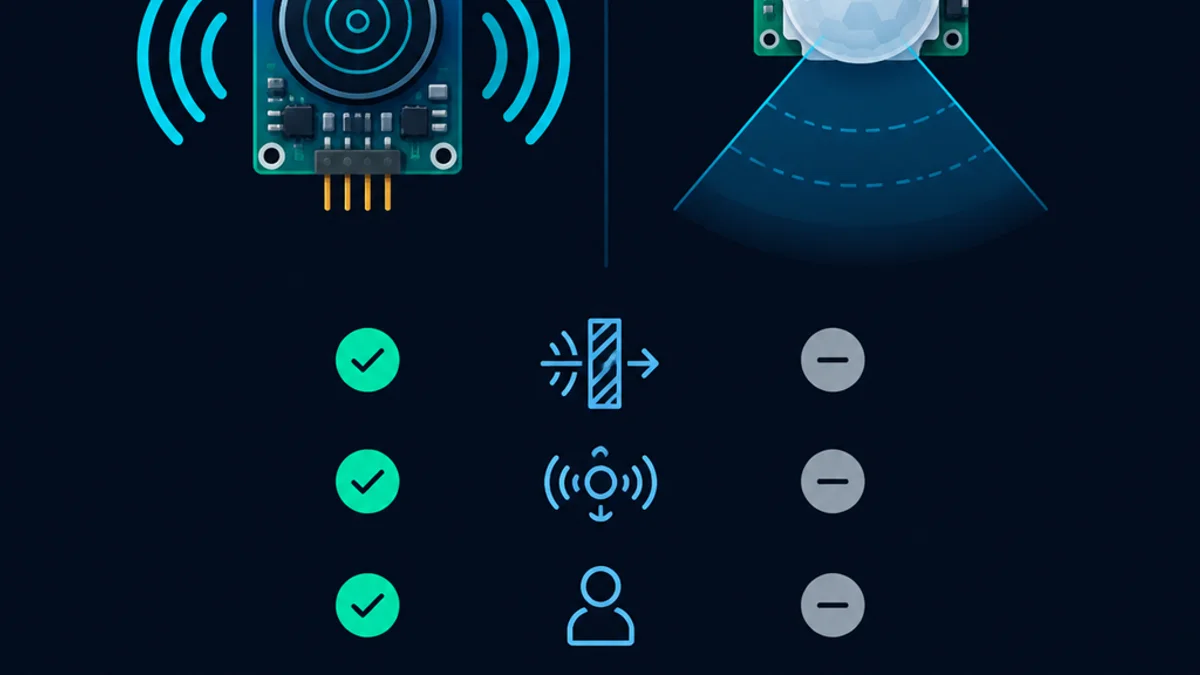
Radar modules have moved from specialist engineering components into a mainstream sensing layer for vehicles, factories, smart buildings, sports devices, drones, and connected consumer products. For buyers, developers, and OEM teams, the challenge is not simply finding radar system manufacturers; it is understanding which radar module players fit the application, frequency band, interface, certification path, and product roadmap. This guide gives a practical view of the main manufacturer categories, where mmWave radar is being adopted, and how to compare module options without getting lost in overlapping claims.
Who are the main radar module players today?
The main radar module players fall into three broad groups: semiconductor companies that supply radar chips and reference platforms, module manufacturers that package sensors into easier-to-integrate hardware, and application-focused radar system manufacturers that sell finished or semi-finished radar products for markets such as automotive, industrial, marine, sports, and smart home. In practice, many successful products combine all three layers: a chip from a major semiconductor vendor, a module design from a specialist manufacturer, and software tuned for a specific use case.
Among the most visible names in mmWave radar are Infineon Technologies, Texas Instruments, NXP Semiconductors, Murata, Acconeer, Vayyar Imaging, Nisshinbo Micro Devices, smartmicro, Ainstein, Chengdu Song Yuan Technology, and several more specialized or regional players. Some focus on highly integrated sensor ICs, while others focus on ready-made modules with antennas, microcontrollers, firmware, housings, and communication interfaces. That distinction matters because a chip-level solution gives engineering teams flexibility, while a finished module can shorten development time and reduce RF design complexity.
A useful way to evaluate the market is to ask what the supplier is really selling. Is it a radar IC, an antenna-in-package sensor, a certified module, a development kit, a software stack, or a complete radar system? The answer affects cost, compliance work, firmware ownership, data access, and how easily the radar can become part of a branded end product.

The radar module market is widening beyond automotive
Automotive ADAS remains a major force behind radar development, especially for 77 GHz and 79 GHz sensors used in front, corner, blind spot, and higher-resolution perception systems. NXP describes its automotive radar portfolio around 77 GHz RFCMOS transceivers, processors, and SoCs for applications ranging from compact radar sensors to 4D imaging radar, while Texas Instruments positions its 60 GHz and 77 GHz mmWave sensors for both industrial and automotive applications. (nxp.com)
But the broader radar module market is no longer only about cars. One market forecast projects mmWave radar module revenue rising from USD 979.1 million in 2025 to USD 1,753.4 million by 2035, with industrial applications expected to account for a large share of demand in 2025. The same forecast identifies 24 GHz modules as a major frequency segment, reflecting their appeal in cost-sensitive industrial sensing, motion detection, and presence detection applications. (futuremarketinsights.com)
That growth is being driven by a simple design reality: radar can sense motion, distance, speed, angle, and presence without relying on visible light. It can also work behind certain plastics and enclosures, which allows cleaner industrial design than exposed cameras or optical sensors. For privacy-sensitive spaces, radar may detect movement or vital signs without capturing identifiable images, making it attractive for smart homes, elder care, occupancy sensing, and in-cabin automotive monitoring.
Leading semiconductor platforms shape the module ecosystem
Many radar modules start with ICs and reference designs from large semiconductor suppliers. These companies may not always sell “modules” in the way an OEM buyer imagines, but they heavily influence the capabilities, documentation, toolchains, and development paths available to module makers.
Infineon Technologies is a major radar silicon supplier with XENSIV radar sensors across 24 GHz, 60 GHz, and 77/79 GHz categories. Its 60 GHz IoT radar sensors are positioned for presence sensing, people tracking, gesture control, short-range localization, and vital-sign sensing, with Antennas-in-Package options that help reduce RF design burden. Infineon also maintains a radar module partner ecosystem, showing how chip vendors support third-party module and evaluation-kit suppliers. (infineon.com)
Texas Instruments offers a broad portfolio of 60 GHz and 77 GHz mmWave radar sensors for industrial and automotive use. TI emphasizes integrated radar SoCs, antenna-on-package options, edge intelligence, and design resources that can help engineering teams move from evaluation to embedded sensing. Its industrial pages highlight use cases such as operator detection in dangerous areas, while its automotive portfolio addresses in-cabin sensing, occupant detection, and higher-performance vehicle radar. (ti.com)
NXP Semiconductors is especially important in automotive radar. Its 77 GHz radar transceivers and one-chip SoCs support corner, front, long-range, and imaging radar architectures, with an ecosystem built around automotive safety, processing, networking, and system-level integration. For teams designing production vehicle radar, NXP is often evaluated less as a standalone module supplier and more as a scalable automotive radar platform provider. (nxp.com)
These chip-level players matter even when an OEM plans to buy a ready-made module. The underlying IC can affect frequency band, bandwidth, channel count, power consumption, available raw data, supported firmware, and long-term supply confidence.
Specialist module manufacturers make radar easier to adopt
Specialist manufacturers sit closer to the finished product. They integrate antennas, RF circuits, processors, firmware, and physical layouts into modules that can be embedded into appliances, training gear, vehicles, robots, or industrial equipment. This is where buyers often compare practical details such as UART support, BLE connectivity, operating temperature, detection range, enclosure needs, and regulatory readiness.
Acconeer is known for compact pulsed coherent radar sensors and modules aimed at distance, presence, and micro-motion sensing. Its product information highlights low power consumption, scalability, and modules such as the XM126, which combines the A121 radar sensor with Bluetooth and an onboard antenna for easier integration. This makes Acconeer relevant for compact connected devices where size, power, and developer accessibility matter. (acconeer.com)
Murata packages ICs, peripheral components, and antenna designs into mmWave radar sensor modules for smart home, industrial, and automotive applications. Murata emphasizes stable detection, resistance to environmental fluctuations, and high-frequency sensing in bands such as 60 GHz and 77 GHz as an alternative or complement to infrared and ultrasonic sensors. The company has also demonstrated 60 GHz in-cabin radar concepts for child presence detection and occupant-related sensing. (murata.com)
Nisshinbo Micro Devices offers 24 GHz Doppler radar modules such as the NJR4267 series, integrating antenna, RF circuit, IF amplifier, MCU, voltage regulator, and signal processing in a compact package. The series supports interfaces including UART, PWM, and CMOS-level output, making it relevant for motion detection and embedded sensing projects that need a packaged Doppler radar module rather than a chip-level design. (nisshinbo-microdevices.co.jp)
Chengdu Song Yuan Technology, also seen through MicRadar materials, is associated with 24 GHz millimeter-wave radar modules for human presence and distance perception in appliances such as air conditioners and related home equipment. Its product materials describe FMCW-based sensing for moving and stationary people, scene recognition, and operation in environments affected by temperature, humidity, noise, airflow, dust, or light. (en.micradar.cn)
For product teams, this category is often the sweet spot. It provides enough integration to avoid designing RF hardware from scratch, but enough flexibility to build branded devices, dashboards, apps, and differentiated user experiences.
Application-focused radar system manufacturers serve demanding markets
Some radar system manufacturers are best understood by their end markets rather than by a single module specification. They sell radar sensors, complete platforms, or deeply engineered subsystems for traffic, aviation, drones, vehicles, marine safety, or specialized industrial environments.
smartmicro develops and manufactures radar sensors for traffic management, automotive, and airborne industries. Its automotive DRVEGRD radar family is positioned for ADAS, autonomous driving, and industrial vehicles, with 4D/UHD sensing, wide field of view, long-range detection, multi-sensor coverage, and integration options such as Automotive Ethernet, CAN FD, ROS, ROS2, and Autoware support. (smartmicro.com)
Vayyar Imaging focuses on 4D imaging radar-on-chip technology for automotive, smart home, senior care, and other sensing applications. Its automotive materials emphasize in-cabin monitoring, ADAS, ARAS, multi-target tracking, and wide field-of-view sensing, including solutions that support child presence detection and occupant-related safety functions. (vayyar.com)
Ainstein is visible in drone and mobility radar, including products such as the US-D1 radar altimeter. The US-D1 is a 24 GHz radar altimeter with UART and CAN interfaces, designed for UAV altitude measurement in all-weather contexts, and Ainstein also references a broader portfolio covering bands such as 24 GHz, 60 GHz, and 76–81 GHz. (ainstein.ai)
Alltek Marine Electronics, often known by AMEC, is primarily associated with AIS electronics and marine safety solutions rather than generic mmWave module catalogs. Its company materials describe AIS appliances and applications ranging from modules to transceivers and large-scale vessel monitoring systems, while related Alltek Group materials reference use of AMEC’s mmWave radar field experience in high-precision, high-speed computing solutions including 60 GHz mmWave radar modules. (alltekmarine.com)
This group is valuable when the radar is part of a mission-critical system. In those cases, the buyer is often paying not only for sensing hardware, but also for calibration, ruggedization, field experience, documentation, and application-specific support.
Frequency bands define what a radar module can do
Frequency is one of the first filters when comparing radar module players. A 24 GHz Doppler module, a 60 GHz presence sensor, and a 77 GHz automotive radar may all be called “mmWave radar,” but they are not interchangeable in real products.
Common radar module frequency choices include:
- 24 GHz: Often used for Doppler speed measurement, motion detection, industrial sensing, appliance presence detection, traffic-related sensing, and cost-sensitive embedded products. It is common in simple speed and movement applications because modules can be practical, available, and comparatively straightforward to integrate.
- 60 GHz: Popular for short-range high-resolution sensing, people presence, gesture control, occupancy, vital signs, smart home devices, in-cabin monitoring, and compact IoT designs. Antenna-in-package and small form factor options make this band attractive for consumer and building applications.
- 76–81 GHz or 77/79 GHz: Strongly associated with automotive radar, ADAS, autonomous vehicles, industrial vehicles, high-resolution tracking, and longer-range sensing. This range is typically selected when object separation, range, angular resolution, and vehicle-grade sensing are priorities.
- 120 GHz and above: Used in more specialized high-resolution sensing contexts where compact antennas and fine measurement resolution may be valuable, although supplier availability, cost, and regulatory considerations become more selective.
Frequency does not decide everything. Antenna design, bandwidth, transmit and receive channel count, signal processing, mounting position, enclosure material, firmware, and calibration can matter just as much. Still, choosing the wrong band early can force expensive redesign later, especially if the product must pass regulatory testing or fit inside a small enclosure.
BLE and UART integration are becoming product differentiators
For many OEMs, the most important radar question is no longer “Can it detect speed or presence?” It is “How easily can this module connect to the rest of my product?” That is why BLE, UART, CAN, Ethernet, SPI, and software APIs can be as commercially important as raw sensing performance.
UART is a common choice for embedded products because it is simple, stable, and widely supported by microcontrollers. A UART-enabled radar module can send speed, distance, object, or presence data to a host board that manages display logic, motor control, alerts, cloud connectivity, or local storage. Nisshinbo’s NJR4267 series, for example, lists UART among its supported output interfaces, while Ainstein’s US-D1 radar altimeter lists UART and CAN for UAV integration. (nisshinbo-microdevices.co.jp)
BLE is especially useful when the radar product needs to connect directly to a mobile app, tablet, or consumer-facing dashboard. ZLYRADAR’s BLE UART ball speed radar module is positioned for app-connected sports products such as baseball pitch speed apps, tennis serve speed devices, soccer kick systems, cricket bowling trackers, coaching tools, and private-label radar products. Its related materials describe a 24 GHz Doppler radar core with BLE and UART communication for sports training device integration. (zlyradar.com)
That shift changes the product opportunity. A basic speed radar can become a training platform when the module supports app workflows, session history, leaderboards, progress tracking, coaching reports, or exportable data. The radar still measures motion, but the business value comes from the experience built around that measurement.
How should buyers compare radar system manufacturers?
Buyers should compare radar system manufacturers by matching the supplier’s strongest use case to the product’s real operating environment, not by choosing the most advanced-sounding module. A module optimized for in-cabin child presence detection may be a poor fit for sports speed measurement, and a long-range automotive radar may be unnecessarily complex for appliance occupancy sensing.
A practical shortlist should cover the following decision points:
- Application fit: Confirm whether the supplier has experience in your target market, such as ADAS, industrial automation, HVAC, smart home, drones, marine, sports, healthcare, or traffic management.
- Frequency and sensing mode: Decide whether the application needs Doppler speed, FMCW range measurement, presence detection, angle estimation, point-cloud output, or 4D imaging.
- Integration interface: Check whether the module supports BLE, UART, CAN, Automotive Ethernet, SPI, USB evaluation tools, cloud connectivity, or a documented API.
- Data access: Determine whether you receive only processed object data or can access lower-level radar data for custom algorithms.
- Mechanical constraints: Review antenna field of view, mounting angle, enclosure material, heat, vibration, sealing, and available board space.
- Software ownership: Ask whether detection algorithms are locked, tunable, licensed separately, or delivered as source, binary, API, or configurable firmware.
- Certification path: Check regional radio approvals, automotive qualification needs, safety goals, and whether the existing module certification helps your final product.
- Scalability: Make sure the supplier can support prototypes, pilot production, and production volume without forcing a redesign.
- Roadmap alignment: Choose a player whose future products match your likely next tier, whether that means lower power, higher resolution, app connectivity, or automotive-grade robustness.
This framework prevents overbuying and underbuying. A startup making a connected pitching net may prioritize BLE, UART, compact layout, and app integration support. A factory automation integrator may prioritize stable detection in dust, vibration, and poor lighting. An automotive Tier 1 may prioritize functional safety, qualification, synchronization, raw data pipelines, and long-term lifecycle support.

Sports, healthcare, and smart spaces are changing radar requirements
Non-automotive radar applications are growing because radar can add intelligence without forcing users to interact with screens or cameras. In sports, radar modules can measure ball speed, swing speed, serve speed, kick speed, or throwing velocity, then connect that data to coaching apps. The hardware requirement may be a compact Doppler module, but the product requirement is a complete training experience.
In healthcare and wellness, radar is being explored for contactless respiration, heartbeat, sleep, activity, and fall-related sensing. Infineon highlights 60 GHz radar use for vital-sign tracking in consumer electronics, healthcare, driver assistance, and industrial applications, while Vayyar’s broader positioning includes senior care and smart home sensing through radar-on-chip technology. (infineon.com)
Smart buildings and appliances create another demand layer. Murata notes that mmWave radar can support presence and position detection for security, monitoring, smart appliances, air conditioners, and televisions, while Chengdu Song Yuan’s MicRadar material describes 24 GHz radar modules for human perception in air-conditioner applications. (murata.com)
These markets reward modules that are small, low power, easy to hide behind product surfaces, and capable of sending clean processed data to a host system. They also reward suppliers that understand user experience. A smart thermostat does not need an automotive-grade point cloud; it needs reliable occupancy context that helps the device behave intelligently without annoying the user.
A practical shortlist of notable radar module players
Instead of ranking companies universally, it is more useful to group radar module players by where they tend to be strongest.
Strong semiconductor and platform players:
- Infineon Technologies: 24 GHz, 60 GHz, and 77/79 GHz radar sensors; strong in IoT, industrial, consumer, and automotive radar ecosystems.
- Texas Instruments: 60 GHz and 77 GHz mmWave radar SoCs; strong design resources for industrial and automotive sensing.
- NXP Semiconductors: 77 GHz automotive radar transceivers, processors, and SoCs; strong fit for automotive ADAS and imaging radar architectures.
Strong module and compact sensing players:
- Acconeer: Low-power pulsed coherent radar sensors and modules for distance, presence, and micro-motion sensing.
- Murata: Integrated mmWave radar sensor modules for smart home, industrial, and automotive sensing.
- Nisshinbo Micro Devices: 24 GHz Doppler modules and radar components with embedded processing and practical output interfaces.
- Chengdu Song Yuan Technology: 24 GHz human sensing modules for appliances and indoor presence applications.
Strong application-focused radar system manufacturers:
- smartmicro: Automotive, traffic management, and airborne radar sensors with high-performance detection and integration options.
- Vayyar Imaging: 4D imaging radar-on-chip solutions for automotive, in-cabin, smart home, and care-related sensing.
- Ainstein: Drone, UAV, and mobility radar products including radar altimeters and collision-avoidance-oriented solutions.
- Alltek Marine Electronics and related Alltek Group activity: Marine electronics, AIS systems, and adjacent mmWave radar module activity through group-level technology integration.
- ZLYRADAR: Sports-focused radar modules such as BLE and UART ball speed radar cores for connected training devices.
The best supplier is the one whose hardware, firmware, documentation, interface, and support model match your product. A well-supported mid-range module can outperform a more advanced sensor if it reaches production faster and produces cleaner data for the actual user experience.
Integration planning matters as much as module selection
Radar performance depends heavily on installation. A module tested on a bench may behave differently inside a plastic housing, behind a tinted cover, near metal brackets, beside wireless antennas, or in a vibrating machine. Before committing to a supplier, teams should prototype with the intended enclosure, mounting angle, power supply, and host processor.
A good integration plan includes field testing in realistic conditions. For sports products, that means testing different ball sizes, speeds, approach angles, user positions, and indoor or outdoor backgrounds. For industrial products, it means testing dust, moisture, moving machinery, reflective surfaces, and target confusion. For smart home products, it means testing pets, curtains, fans, human stillness, and privacy expectations.
Software should be planned early as well. Decide whether the radar module will output simple events, numerical measurements, object lists, point clouds, or raw data. The more raw the output, the more freedom your team has; the more processed the output, the faster you may get to market. Neither is automatically better. The right answer depends on engineering resources, differentiation goals, and support expectations.
The future favors modular, software-defined radar products
Radar is becoming more software-defined, more compact, and more connected. Automotive suppliers are moving toward higher-resolution perception and multi-sensor fusion. Industrial teams want rugged, weather-tolerant sensing that can be added to equipment without expensive redesign. Consumer and sports brands want modules that connect to apps, personalize feedback, and turn sensor readings into useful experiences.
This creates room for both large radar system manufacturers and niche radar module players. The major semiconductor companies will continue to set the platform direction, but smaller module specialists can win by solving integration problems for specific markets. That may mean a BLE sports radar core, a compact occupancy module for appliances, a drone altimeter with simple interfaces, or a certified industrial sensor that works reliably in harsh conditions.
For buyers, the smartest approach is to start with the use case rather than the component catalog. Define what must be detected, where it will be mounted, how the data will be used, what interface is required, and how the product might evolve. Then compare suppliers against that reality. Radar is powerful, but the best radar module is the one that fits the product, the user, and the path to production.
Not sure which sensor fits your project?
Talk to our mmWave application engineers for a free consultation.
Specify your hotel project with our engineers
Send your room count, ceiling type, and protocol preference. We will return a sample plan and quote within 24 business hours.
- Move from general guidance into a product or application discussion.
- Use RFQ when pricing, drawings, MOQ, or launch timing needs structure.
- Keep a direct contact path visible for fast clarifications and handoff.