Radar Side Effects: Understanding Risks & Safety
Do radar sensors have side effects? Review RF exposure science for 24GHz and 60GHz modules, safety standards and why mmWave is safe for occupied spaces.
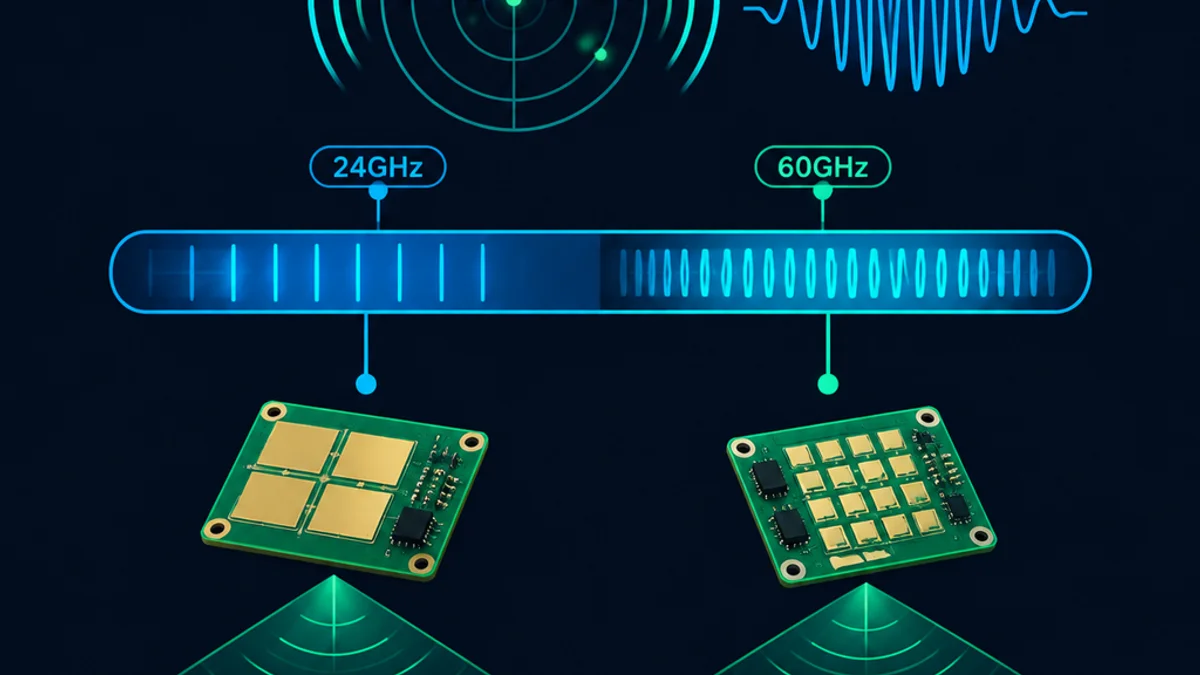
Radar uses radiofrequency energy to detect distance, speed, direction, and movement, and most everyday or properly controlled occupational exposures are not expected to cause harm. The main confirmed health concern is excessive tissue heating at high exposure levels, while reported symptoms such as headache, fatigue, anxiety, or sleep disruption are most often discussed in occupational or accidental exposure settings rather than normal public use. This article explains the side effects of radar in plain language, separates documented risks from uncertain concerns, and outlines practical ways to reduce exposure when working near radar systems.
What are the side effects of radar?
The short answer: the most established radar side effects are thermal, meaning they come from the body absorbing enough radiofrequency energy to heat tissue. At very high levels, that heating could contribute to burns, eye injury, or heat-related tissue damage; at lower, controlled levels, evidence for lasting harm is much weaker and often inconclusive. Some occupational reports describe headaches, insomnia, irritability, fatigue, anxiety, and concentration or memory complaints, but these symptoms are nonspecific and can also be influenced by shift work, noise, stress, heat, chemicals, lack of sleep, or other workplace factors. RF radiation is non-ionizing, so it does not damage DNA in the same direct way that x-rays or gamma rays can, although cancer questions continue to be studied. (cancer.org)
That distinction matters because the word “radiation” can sound automatically dangerous. Radar radiation is not the same category as nuclear radiation or medical x-rays. It belongs to the radiofrequency and microwave part of the electromagnetic spectrum, where the primary recognized interaction with the body is energy absorption and heating when exposure is intense enough. (cancer.org)
Radar exposure depends on dose, not just the presence of a radar
A radar unit being nearby does not tell you much by itself. Risk depends on the frequency, transmitted power, antenna design, beam direction, distance from the antenna, time spent in the beam, and whether a person is in a controlled workplace with training or in an uncontrolled public area. A brief side-lobe exposure far from a rotating antenna is very different from standing close to a high-power fixed beam during maintenance.
Two ideas help make sense of exposure:
- Power density: the amount of RF power passing through an area, often used for antennas and sources farther from the body.
- SAR, or specific absorption rate: the rate at which the body absorbs RF energy, used in many exposure evaluations up to 6 GHz in U.S. FCC rules.
- Absorbed power density: a metric used for higher frequencies where energy is absorbed closer to the skin surface.
- Averaging time: safety limits often consider exposure over a defined period rather than an instant alone, because heating depends on both intensity and duration.
U.S. FCC exposure rules use SAR limits for 100 kHz to 6 GHz, including occupational and general population categories, and use maximum permissible exposure limits above 6 GHz. The FCC’s general-population limits are lower than occupational limits because the public may include children, people with health vulnerabilities, and people who have not received RF safety training. (law.cornell.edu)

How radar energy interacts with the body
Radar systems often operate in microwave or higher radiofrequency bands. At higher frequencies, RF energy tends to be absorbed more superficially, especially in skin and the front surface of the eye, instead of penetrating deeply through the body. A review of RF energy above 6 GHz notes that expected hazards in that range are mainly excessive heating of skin and cornea, and it lists decreasing penetration depth as frequency rises: roughly 4.09 mm at 6 GHz, 1.9 mm at 10 GHz, 0.43 mm at 30 GHz, and 0.19 mm at 94 GHz in dry skin modeling. (pmc.ncbi.nlm.nih.gov)
This is why claims that typical radar “cooks the brain” are usually misleading. Radar can heat tissue if exposure is strong enough, but for many higher-frequency radar beams, the absorbed energy is concentrated near the surface rather than deep inside the head or torso. The practical safety issue is still real for people who work close to high-power antennas, but it is not the same as being exposed to ionizing radiation.
Pulsed radar also deserves a quick explanation. Many radar systems transmit short bursts rather than a continuous wave. A pulse may have a high peak power, but the average exposure over time depends on how long and how often those pulses occur. Safety evaluations therefore consider the beam pattern, duty cycle, distance, and exposure duration instead of peak power alone.
Documented and plausible health effects
The best-established adverse effect from intense RF exposure is heating. If the body absorbs too much energy faster than it can dissipate heat, local tissue temperature may rise. Thermal injury is the reason exposure standards focus heavily on preventing whole-body heat stress and excessive localized heating. ICNIRP states that its RF guidance is designed to keep exposure below thresholds where these interactions become detrimental, using basic restrictions such as SAR or absorbed power density with conservative factors. (icnirp.org)
Possible effects discussed in radar and RF safety include:
- Skin warmth or burns: usually a concern only with unusually high exposure, close proximity, or equipment faults.
- Eye effects: the cornea and lens are often discussed because the eye has limited cooling compared with many other tissues.
- Heat stress: a whole-body concern if RF exposure is high enough to add to environmental heat or heavy work.
- Headache or fatigue: reported in some occupational and accidental exposure contexts, but not specific to radar.
- Sleep, mood, or concentration complaints: described in some reports, yet difficult to attribute without careful exposure assessment.
A review focused on RF exposures above 6 GHz found that exposures far above current ICNIRP and IEEE limits would be required to produce thermally hazardous effects involving skin or cornea. That does not mean safety rules can be ignored; it means the limits are designed to keep ordinary permitted exposures well below levels associated with thermal injury. (pmc.ncbi.nlm.nih.gov)
Occupational reports deserve care, not panic
People who operate, maintain, test, or repair radar equipment may have higher potential exposure than the general public. That includes some military personnel, aviation workers, ship crews, tower workers, electronics technicians, and people who service RF or microwave systems. The risk profile changes most during maintenance, troubleshooting, alignment, or unusual operations when a person may be closer to the antenna, waveguide, or beam path than during normal use.
The occupational literature is mixed. A large study of U.S. enlisted Navy personnel compared groups with high and low opportunity for radar exposure during the Korean War period and did not detect adverse effects in the health indexes studied, though the authors noted that actual exposure for each person could not be established and that functional or behavioral changes were not investigated. (pubmed.ncbi.nlm.nih.gov)
Some smaller or more specific reports have described symptoms after radar or microwave exposure, especially headache, irritability, insomnia, emotional changes, or temporary hypertension after accidental exposure. However, symptom studies are hard to interpret because exposure reconstruction can be uncertain, symptoms are often self-reported, and workplace conditions can introduce many confounders. One frequently cited airport radar-operator paper reported symptoms and cognitive associations but is marked in PubMed as a retracted publication, so it should not be treated as strong evidence on its own. (pubmed.ncbi.nlm.nih.gov)
A practical view is better than a dismissive one. If several workers in the same area report symptoms, the right response is not to assume radar is the cause immediately, but also not to ignore the pattern. The useful next step is a formal RF exposure assessment, review of operating procedures, equipment maintenance records, work schedules, ventilation, heat load, noise, chemical exposures, and other possible contributors.
Can radar exposure cause cancer?
Current evidence does not prove that radar exposure causes cancer, but RF radiation remains an area of scientific review. The International Agency for Research on Cancer classifies radiofrequency electromagnetic fields as “possibly carcinogenic to humans,” a category based largely on limited evidence involving heavy mobile-phone use rather than radar-specific proof. The American Cancer Society summarizes that workplace studies involving radar and other RF-exposed groups have not shown a clear increase in cancer risk, although some individual studies have suggested possible links and longer-term research remains important. (iarc.who.int)
The National Cancer Institute notes that a Navy personnel study found no excess of brain tumors among personnel with high probability of radar exposure, while some studies in RF or microwave equipment workers suggested possible increased risks in narrower groups. It also notes that a large multinational case-control study found no clear evidence that occupational RF exposures are associated with increased glioma or meningioma risk. (cancer.gov)
A systematic review and meta-analysis focused on occupational radar exposure reported no significant increase in overall mortality ratio or cancer risk ratio among radar-frequency workers. That is reassuring, but not a reason to abandon controls, because good occupational safety depends on keeping exposure below accepted limits even when disease evidence is uncertain. (pmc.ncbi.nlm.nih.gov)
Common radar settings and how risk differs
Not all radar systems create the same exposure situation. A small marine radar, a police speed radar, an airport surveillance radar, and a military fire-control radar can differ greatly in power, beam shape, operating distance, duty cycle, and access controls. The phrase “side effects of radar” therefore needs context.
Marine radar
Marine radar antennas are usually installed above deck level and rotate, which reduces the chance that one person remains in the main beam for long. Normal use is typically managed by distance and antenna placement. The higher-risk scenario is maintenance or standing close to an energized antenna, especially near the beam path.
Airport and weather radar
Airport and weather systems can be more powerful and are usually installed with restricted zones, procedures, and trained personnel. Public exposure is generally controlled by siting and access barriers. Worker exposure is most relevant during inspection, repair, testing, or unusual operation.
Military radar
Military radar can involve high power, specialized beam patterns, and complex operating environments. Safety depends heavily on lockout procedures, exclusion zones, training, posted limits, and communication between operators and maintenance staff. In this setting, “just stay away from the antenna” is not detailed enough; workers need site-specific procedures.
Handheld or vehicle-mounted speed radar
Police radar and similar speed-measurement devices are typically lower power than large surveillance systems, but users should still follow manufacturer instructions and agency safety procedures. The main concern is repeated close handling or improper positioning, not casual exposure from a distance.

Myths that make radar risk harder to understand
Radar safety conversations often swing between two extremes: “it is harmless” and “any radiation is dangerous.” Neither is useful. Radar uses non-ionizing RF energy, so it should not be treated like x-rays, but high-power RF sources can still cause harm if exposure is intense enough.
A few myths are worth correcting:
- Myth: Radar radiation is nuclear radiation. It is not. Radar uses RF or microwave energy, which is non-ionizing.
- Myth: If you cannot feel it, it cannot hurt you. Not always. Safety rules exist because exposure can vary, and people may not reliably sense RF fields.
- Myth: Any symptom near radar proves radar caused it. Headache, poor sleep, irritability, and fatigue can have many causes, so exposure measurement matters.
- Myth: Only peak power matters. Average power, distance, beam direction, duty cycle, and time in the field all matter.
- Myth: Cancer risk is settled either way. The strongest statements are more cautious: no clear proof of radar-related cancer, ongoing RF research, and continued need for exposure control.
This balanced view helps people take protective steps without overestimating everyday risk.
When is radar exposure more likely to be hazardous?
Radar exposure is more likely to be hazardous when a person is close to an energized high-power antenna, inside or directly in front of the main beam, exposed for a longer period, or working during maintenance without proper controls. Exposure can also increase when equipment is misaligned, shielding is removed, interlocks are bypassed, warning signs are unclear, or workers assume a unit is off when it is transmitting. Safety limits and procedures are designed to prevent those scenarios, not merely to reassure people after the fact.
A simple risk screen can help:
- Identify the source. What radar is transmitting, at what frequency range, and under what operating mode?
- Locate the beam. Where is the main beam, and where are side lobes or reflections likely?
- Estimate access. Can workers or the public enter areas where exposure may exceed limits?
- Measure when needed. Use qualified RF surveys rather than consumer meters for workplace decisions.
- Control before exposure. Use lockout, signage, barriers, training, and work permits where appropriate.
- Document symptoms and conditions. Record timing, locati0n, tasks, equipment status, heat, noise, sleep, and other exposures.
Practical ways to reduce radar exposure
The most effective protection is usually not a wearable gadget or shielding accessory. It is good engineering and work practice: distance, time management, access control, maintenance discipline, and verified measurements.
Use this checklist when radar exposure is a realistic concern:
- Increase distance whenever possible. RF power density generally falls as distance increases, especially away from the main beam.
- Avoid the main beam. Do not stand in front of or close to an energized antenna unless procedures confirm it is safe.
- Power down for maintenance. Use lockout or tagout procedures where applicable before working near antennas, waveguides, or open RF paths.
- Respect exclusion zones. Barriers and posted signs are there because exposure conditions may not be obvious by sight.
- Use trained personnel for RF surveys. Professional measurements can account for frequency, duty cycle, averaging, and near-field complexities.
- Follow the equipment manual. Safe separation distances and operating restrictions are device-specific.
- Report unusual symptoms or incidents. A credible safety program investigates patterns without jumping to conclusions.
- Protect heat-sensitive situations. Consider environmental heat, heavy protective clothing, and workload because RF heating risk is not isolated from overall heat stress.
For consumers and mariners, the practical advice is simpler: install antennas according to the manufacturer’s instructions, keep people away from the antenna while it is transmitting, avoid unnecessary close exposure, and repair damaged equipment promptly.
Symptoms should be investigated broadly
If you are wondering, “what are the side effects of radar because I feel unwell near one,” take the symptoms seriously but keep the investigation broad. Headaches, sleep problems, anxiety, fatigue, irritability, and concentration issues can come from many sources. In radar workplaces, possible contributors include rotating shifts, poor sleep, stress, high noise, solvents, heat, glare, dehydration, long screen time, and ergonomic strain.
A helpful symptom record includes:
- The date and time symptoms started.
- The exact work area or locati0n.
- The radar system operating status, if known.
- How close you were to antennas or equipment.
- Whether maintenance panels, covers, or interlocks were involved.
- Other conditions, such as heat, noise, fumes, workload, and sleep loss.
- Whether symptoms improved away from the area.
This kind of record helps occupational health staff, safety officers, or medical professionals decide whether RF measurement, medical evaluation, industrial hygiene review, or schedule changes are needed.
The most useful takeaway
The side effects of radar are best understood through exposure level. Properly controlled radar systems are not expected to harm most people, and the strongest established risk is excessive heating at high exposure levels rather than DNA damage from ionizing radiation. Cancer concerns have not been proven for radar exposure, while occupational symptoms deserve careful investigation, especially when exposure controls are weak or incidents occur. (cancer.org)
If you work around radar, the safest approach is practical and measurable: know the beam, keep distance, limit time near active antennas, follow lockout procedures, and request a qualified RF survey when exposure is uncertain. If you are a member of the public, normal distance from properly installed radar equipment is usually a far lower concern than direct, close access to an operating antenna. Balanced caution—not fear—is the right way to manage radar side effects.
Not sure which sensor fits your project?
Talk to our mmWave application engineers for a free consultation.
Specify your hotel project with our engineers
Send your room count, ceiling type, and protocol preference. We will return a sample plan and quote within 24 business hours.
- Move from general guidance into a product or application discussion.
- Use RFQ when pricing, drawings, MOQ, or launch timing needs structure.
- Keep a direct contact path visible for fast clarifications and handoff.